

Replacing an aging bank of lead-acid cells is a genuine turning point for a golf cart owner. A golf cart battery conversion to lithium chemistry changes weight distribution, charging habits, and how far a cart travels on a single charge. DC HOUSE builds a range of LiFePO4 packs aimed at that swap, from compact 50Ah units to full metal-case 100Ah systems.
Why Golf Cart Owners Switch from Lead-Acid to Lithium
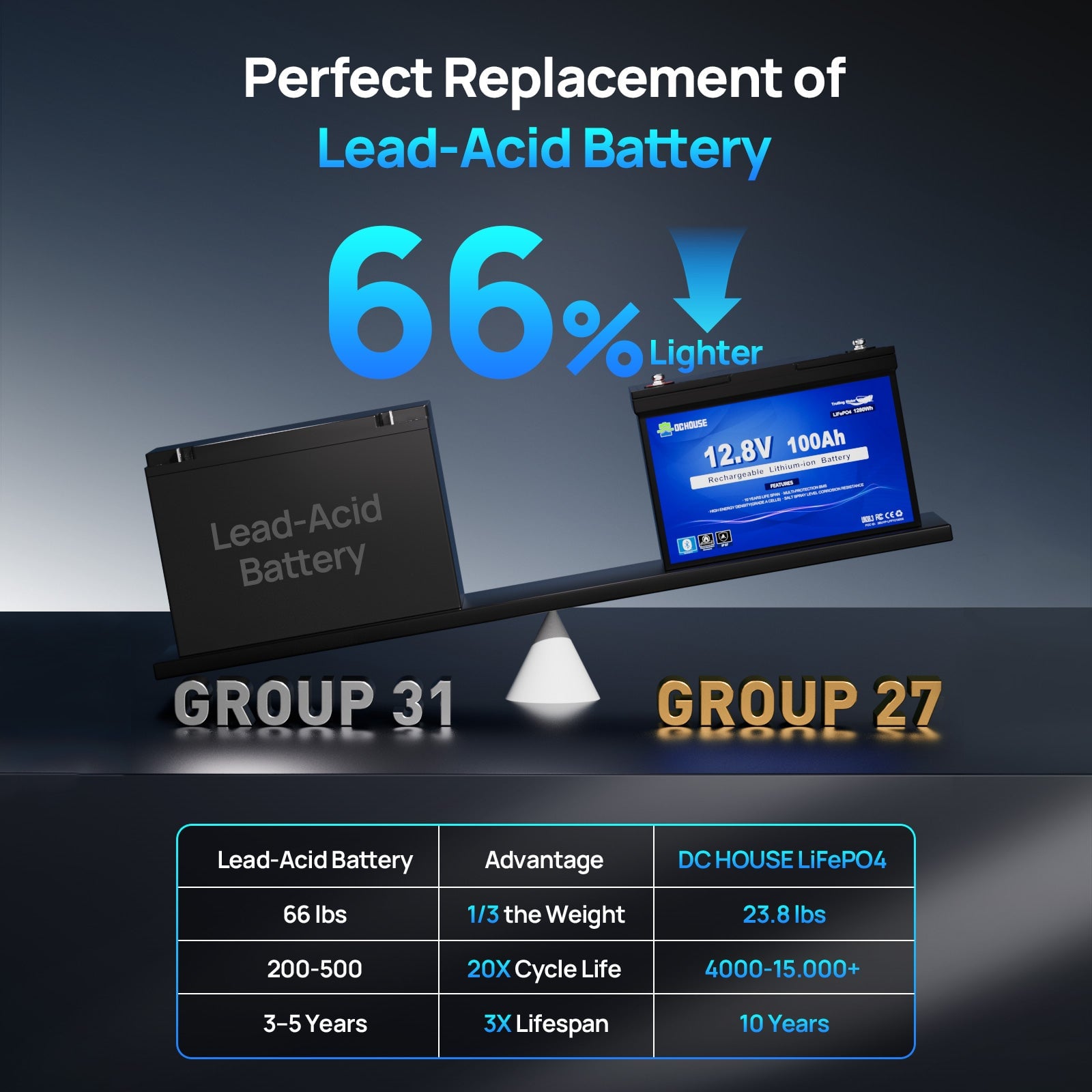
Lead-acid banks have powered golf carts for decades, but they carry well-known drawbacks. They are heavy, slow to recharge, and they lose usable capacity as temperatures drop. A golf cart battery conversion addresses those points directly by swapping multiple flooded cells for a single sealed lithium pack.
DC HOUSE frames this swap as a straightforward one, noting on its own site that lead-acid batteries can be replaced with lithium batteries without redesigning the cart. That matters because most owners are not electricians and want a drop-in alternative rather than a rewiring project. As a result, the conversion tends to focus on matching voltage and case size instead of altering the cart’s wiring.
DC HOUSE 48V 100Ah LiFePO4 Battery: The Full-Power Conversion Option
The 48V 100Ah line is the full-size offering for carts that need sustained output. The Dependable 48V 100Ah model carries a rated capacity of 100Ah, a maximum continuous discharge current of 200A, and a peak current of 280A for 30 seconds, packed into a metal case measuring 514 by 280 by 243 mm with an M8 terminal. It weighs 43.5 kg (95.9 lbs), a figure worth noting against the heavier lead-acid banks it typically replaces.
A newer variant, the SENTRY G100 48V 100Ah, is built to the UL2580 standard and lists a rated capacity of 100Ah at 5120Wh (25°C, 0.5C). This pack weighs 45.0 kg (99.2 lbs) and reaches a peak current of 1000A for 0.64 seconds, a sharper short-burst rating than the Dependable version’s 280A/30s figure. Both versions ship in a steel enclosure rather than a plastic shell, a detail some owners weigh when comparing cases for a golf cart battery conversion.
DC HOUSE 48V 50Ah LiFePO4 Battery: Compact Performance for Lighter Use
For carts that do not need the largest pack available, the Durable 48V 50Ah model offers a lighter alternative. It stores 2560 Wh, runs at a rated voltage of 51.2V, and weighs 26.5 kg (58.42 lbs), roughly half the mass of the 100Ah units. Its maximum continuous charge and discharge current sits at 100A, with peak current reaching 400A for one second.
This pack includes Bluetooth monitoring and low temperature protection, features aimed at owners who want visibility into state of charge without opening the compartment. Dimensions come in at 460 by 333 by 125 mm, a flatter footprint than the full 100Ah case. That shape can matter when a conversion needs to fit into a tray sized for older six-volt or eight-volt lead-acid blocks.
36V and 12V LiFePO4 Options: Compatibility Across Cart Models
Not every cart runs on a 48-volt system, which is why a 36V 100Ah metal case LiFePO4 battery also sits in the lineup. It carries a rated voltage of 38.4V and shares the same 514 by 280 by 243 mm case dimensions as the 48V 100Ah pack, which can simplify fitting for shops that stock both voltages.
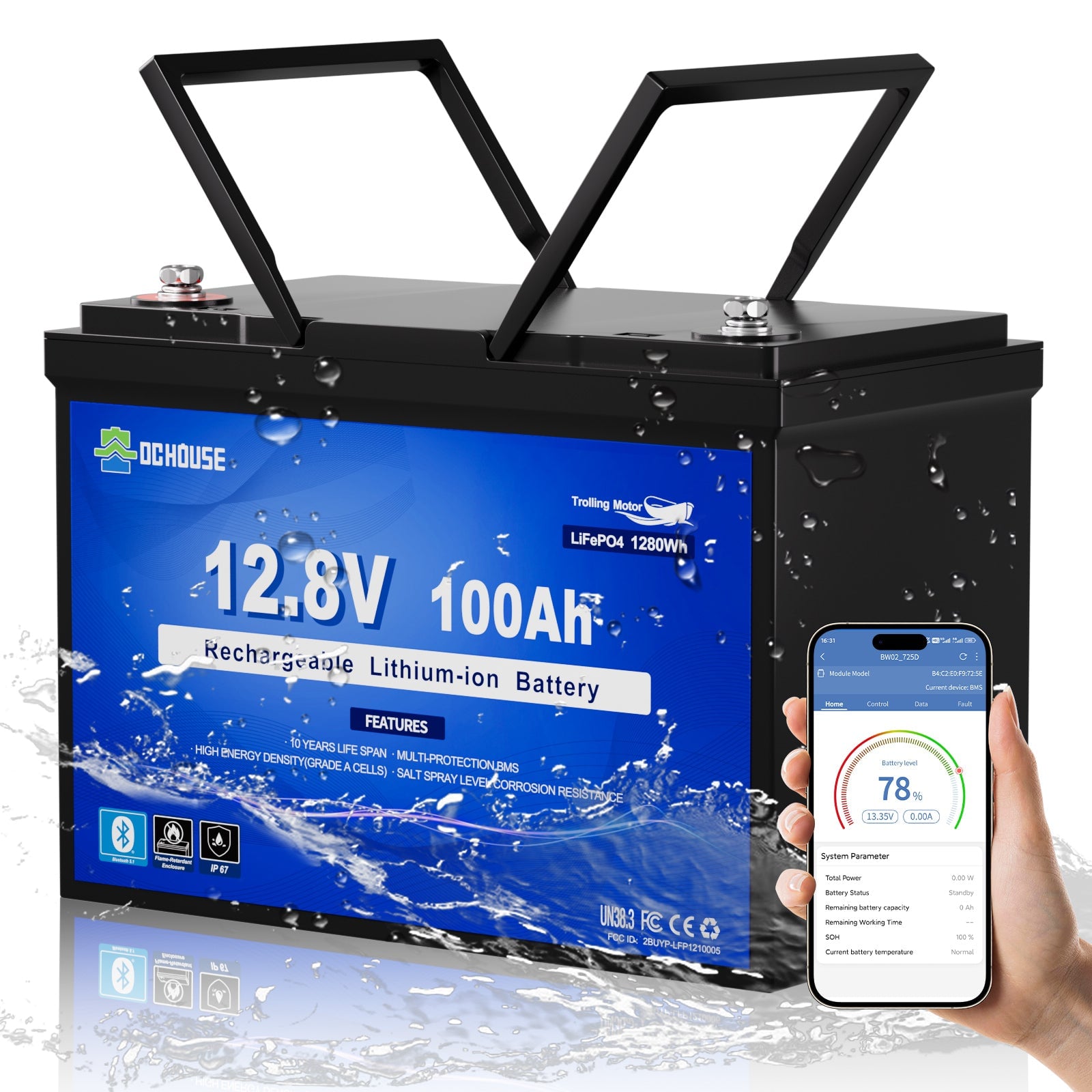
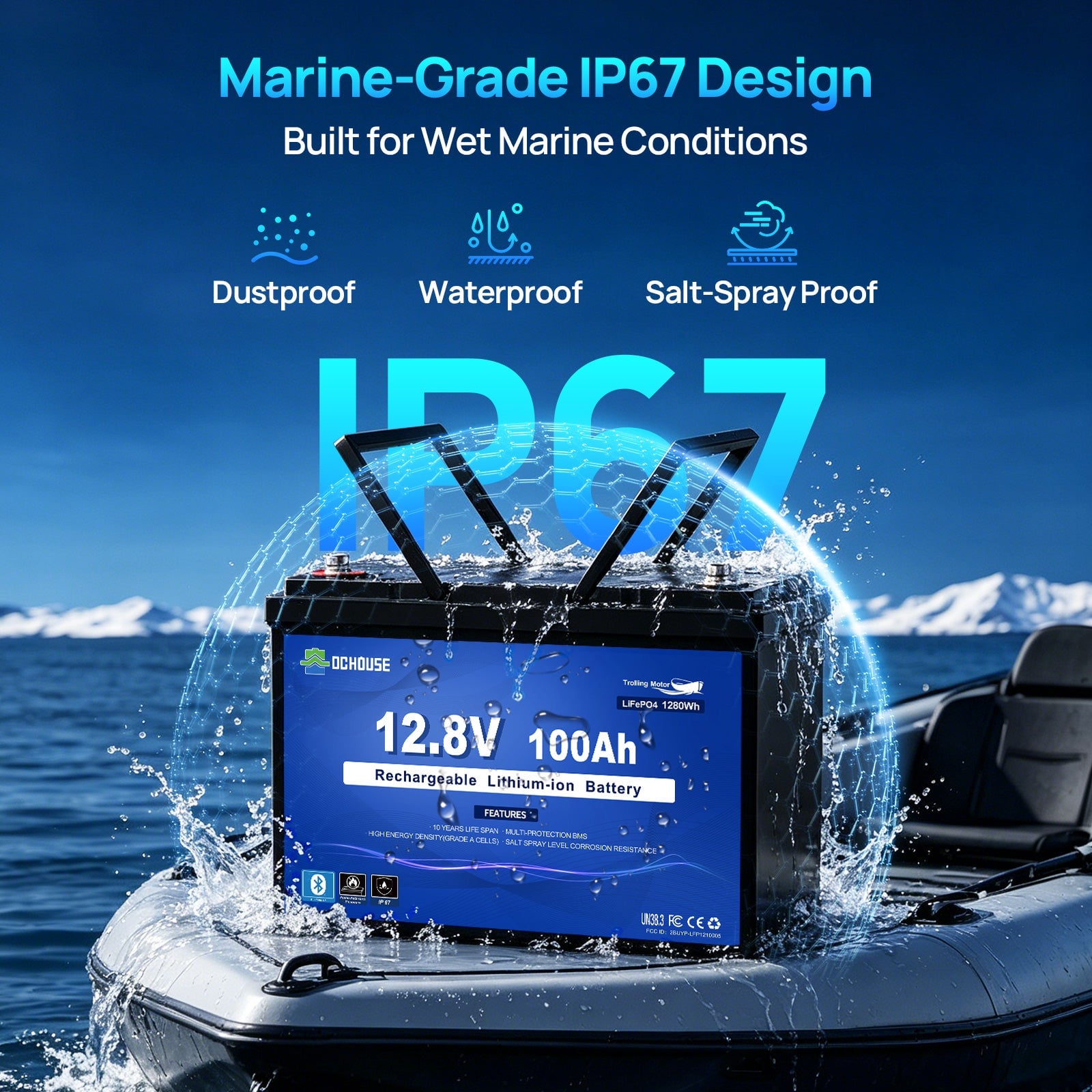
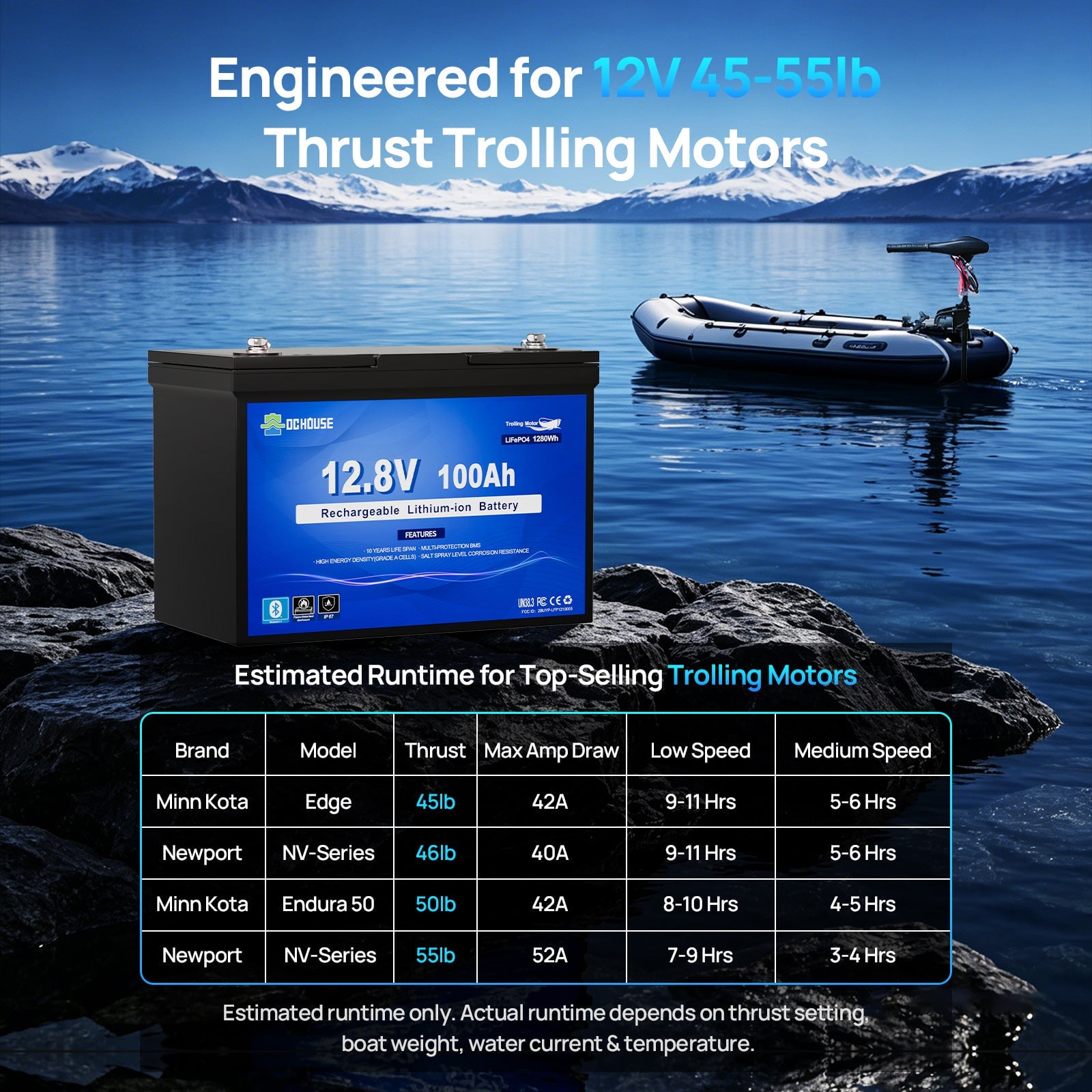
On the smaller end, a 12V 100Ah LiFePO4 battery extends beyond carts into RVs and trolling motors. It runs a standard charge and discharge current of 50A, a maximum continuous rating of 100A, and a peak current of 120A for 10 seconds, figures well below the 36V and 48V packs built for cart propulsion. Having 12V, 36V, and 48V packs under one brand means a golf cart battery conversion project can source a matching charger and monitor regardless of the cart’s original voltage architecture, and DC HOUSE lists all three voltage classes on its own product pages.
Installation, Charging, and BMS Safety Features in Lithium Systems
Every DC HOUSE golf cart pack pairs with a Battery Management System, a feature highlighted across its product pages and its own educational content on BMS function. The 50Ah and 12V models add Bluetooth connectivity along with low temperature protection, which cuts charging below a set threshold to guard the cells. Charging voltage is specified per model, with the 48V packs charging at 58.4V and the 36V pack charging at 43.8V, reaching a peak of 280A for 30 seconds and 670A for half a second.
Operating temperature ranges are also listed by model, and they differ slightly between packs. The SENTRY G100 charges between 0 and 57°C and discharges between -27 and 57°C, a wider discharge window than the standard 48V 100Ah pack’s 0 to 55°C charge range and -20 to 55°C discharge range. These published ranges give installers a concrete reference point when planning where a cart will be stored or used.
- Lead-acid banks in a typical cart setup weigh far more than a single lithium pack, with one customer review citing roughly 90 lbs for the lithium case versus over 400 lbs for the lead-acid bank it replaced.
- LiFePO4 packs list specific capacity figures in both Ah and Wh, while lead-acid batteries are typically rated by amp-hours alone without a published watt-hour figure.
- Charging speed differs sharply, with one 50Ah owner reporting a charge from 30 percent to full in two hours.
- Low temperature protection is built into select lithium models, a feature not present in standard flooded lead-acid batteries.
- Discharge current capability varies widely across the lineup, from a 50A standard discharge on the 12V pack up to a 200A maximum continuous discharge on the 48V 100Ah models.
Real-World Performance: Weight Savings and Range Gains
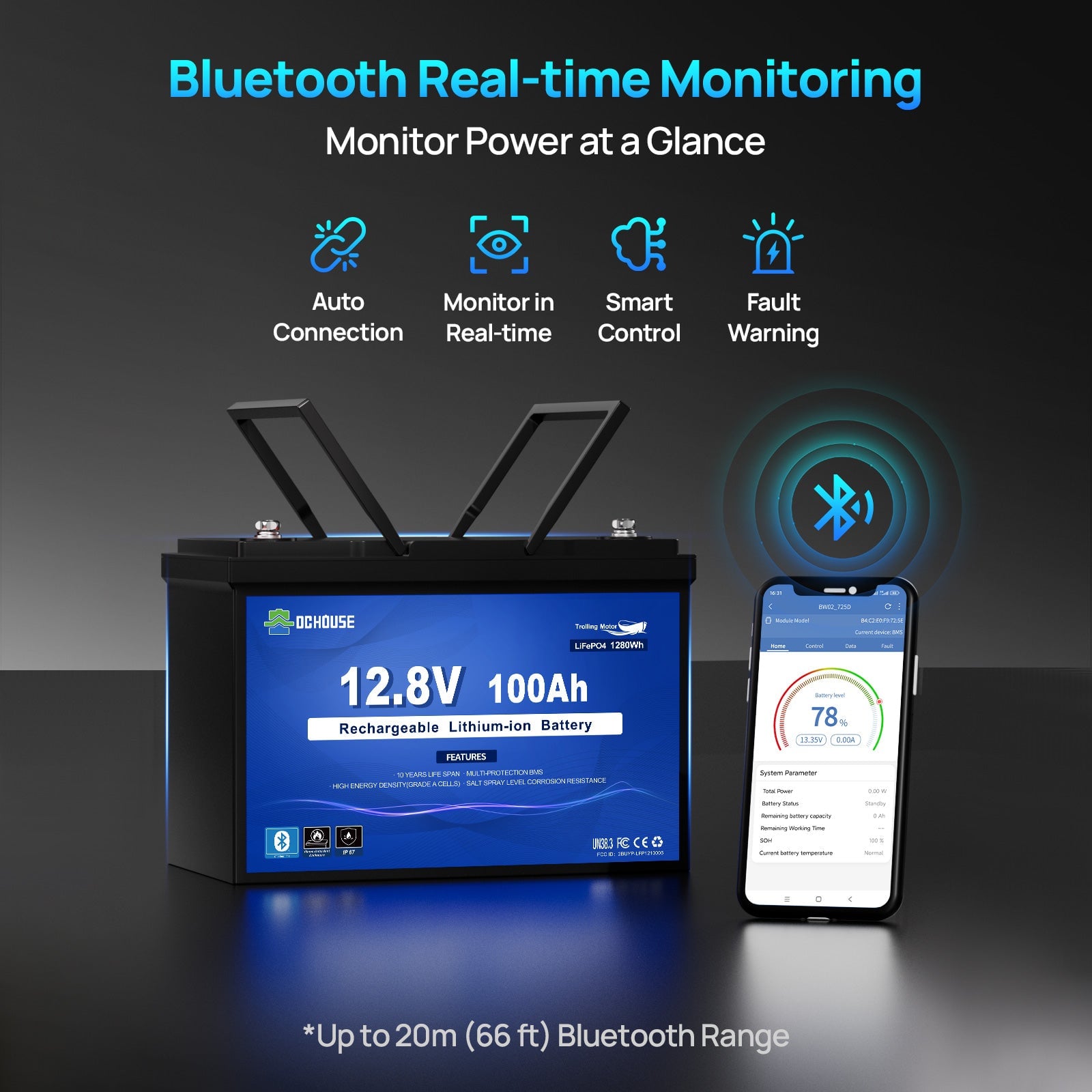
Owner feedback collected on the product pages gives a sense of how these packs behave once installed. One reviewer converting a Yamaha Drive 2 from lead to lithium noted the cart became lighter and accelerated faster after the swap. Another, running a classic Western golf cart, described turning a 42V lead-acid system into a 48V battery and reported a faster-feeling cart afterward.
A separate review on the 50Ah listing mentioned getting 15 to 20 miles per charge in a 2000 Club Car DS used mainly for casual driving rather than a full round of golf. These are individual accounts rather than guaranteed outcomes, but they illustrate the kind of result a golf cart battery conversion can produce when the replacement pack matches the cart’s voltage and physical footprint. Fitment, in several reviews, came down to measuring the existing tray before ordering, which kept the swap limited to the battery compartment rather than the whole cart.
Many conversion projects benefit from DC HOUSE support resources and product documentation when selecting between voltage and capacity options. Matching voltage, case size, and discharge needs to the cart in question remains the core of any lithium swap. A spread of 12V, 36V, and 48V packs gives that matching process a concrete set of options to work from.