

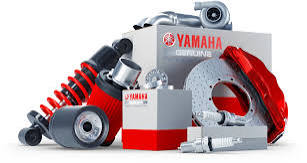
Cold weather and stagnant fuel can do more damage to a marine engine than hours spent running on the water. Outboard winterization is the dividing line between an easy spring startup and a costly repair bill. For Yamaha owners, the off-season checklist covers fuel, cooling, lubrication, and a few targeted parts that keep corrosion and varnish from settling in while the engine sits idle.
What Happens Inside an Idle Marine Engine
An outboard left untouched through the cold months faces a handful of predictable problems. Fuel breaks down and leaves gummy deposits in the carburetor or injectors, water sitting in the cooling passages can freeze and crack a block, and old oil holds contaminants that keep attacking internal surfaces long after the last trip out. Outboard winterization addresses each of these risks before the boat ever gets covered and parked.
Skipping these steps does not usually cause a dramatic failure on day one. Instead, it shows up months later as hard starting, reduced performance, or a water pump that has already worn out from scale buildup. A proper winterization routine, done once a season, avoids most of that trouble entirely.
Understanding Yamaha’s 100 Hour Service Maintenance Kits
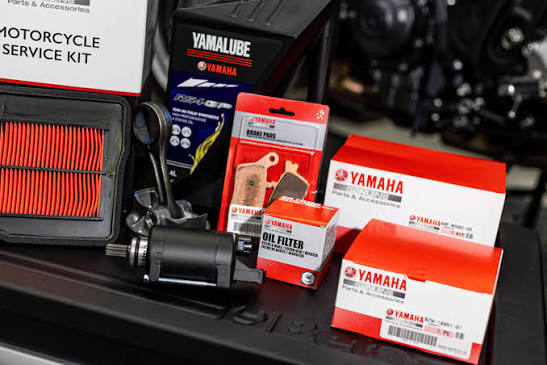
Yamaha scopes its 100 Hour Service Maintenance Kits to specific outboard families rather than selling one universal bundle, so a kit built for F150, F150A, and F150B models produced from 2006 onward differs from the kit scoped to F225, F250, and F300 4.2L V6 outboards across all model years. Each kit gathers the filters, gaskets, and lubricants a technician would otherwise source piece by piece.
Other variants exist for the VF200, VF225, and VF250 SHO lineup, and for F175 and F200 2.8L engines, with some kits including additional cooling system components and others built around Yamalube 5W-30 instead of 10W-30. Because the contents are tied to the specific engine family, confirming the exact outboard model and production year before ordering keeps the parts list accurate.
Fuel System Protection and Primary Fuel Filters
Fuel sitting in a tank and fuel lines over an extended storage period is one of the more common sources of spring problems. Primary fuel filter elements, such as the 6P3-WS24A-02-00 and 6D8-WS24A-00-00, are designed to trap contaminants before they reach the injectors or carburetor, and each is matched to a defined set of outboard model codes and production years. Swapping in a fresh filter element as part of outboard winterization reduces the chance that old, degraded fuel residue circulates through the system once the engine starts again.
Because the filter elements are model-specific, matching the part number to the engine’s model code and production date avoids ordering the wrong element. This step pairs naturally with whatever fuel stabilizer or fuel system treatment already forms part of the broader storage routine.
Water Pump and Cooling System Winterization
The cooling system carries raw water through the engine block, and any water left trapped in those passages is a risk once temperatures drop. Yamaha‘s 61A-W0078-A4-00 Water Pump Repair Kit is built to keep that side of the engine working reliably, since a water pump that is already weakening from wear adds unnecessary risk heading into a cold layup. Pairing a water pump inspection with a thermostat check, using a part such as the 67F-12411-01-00, gives a fuller picture of the cooling system’s condition before storage.
Addressing the water pump before winter rather than after discovering a leak in spring keeps the rest of the cooling system protected. This is also a convenient point in the process to check hoses, clamps, and the water pump housing itself for cracking or corrosion.
Oil Changes and Lubrication for Long-Term Storage
Running oil through an entire storage season carries acids and combustion byproducts that keep working on internal engine surfaces even when the motor is not in use. Changing the oil and oil filter before storage, rather than after, removes that contaminated fluid before it sits for months. Yamaha‘s 69J-13440-04-00 Oil Filter is a direct replacement for the earlier 69J-13440-03-00 part number, is built for F150, F200, F225, and F250 outboards, and is bundled with a small drain gasket, part 90430-08003-00, in several service kit configurations.
Fresh oil paired with a correctly matched filter is one of the more straightforward parts of outboard winterization, but it is also one of the most frequently delayed. Doing it immediately after the final run of the season, rather than waiting, means clean oil is already in place when the engine goes under cover.
- Primary fuel filter elements matched to specific outboard model codes and production years protect the fuel system from stored, degrading fuel.
- Oil filters such as the 69J-13440-04-00 are built for F150, F200, F225, and F250 outboards and replace the earlier 69J-13440-03-00 part number.
- Water pump repair kits, including the 61A-W0078-A4-00, address the cooling system component most prone to wear over time.
- Thermostats such as the 67F-12411-01-00 are available for inclusion when a fuller cooling system inspection is planned.
- Kits are scoped to specific engine families, including F150, F150A, F150B, F225, F250, F300, VF200, VF225, and VF250 SHO lineups, rather than sold as one universal bundle.
Spring Start-Up Following Seasonal Storage
Reversing a winterization routine is generally simpler than performing it, provided each step was done correctly in the fall. Fresh fuel, a clean primary filter, verified cooling system function, and recently changed oil mean the engine should be ready for a normal startup sequence without extra troubleshooting. Yamaha outlines a standard pre-delivery inspection process for new engines, and that same instinct, checking fluids and connections before the first start, applies just as well to a motor coming out of seasonal storage.
A cowling cover, such as the Offshore Deluxe cover made from SurLast solution-dyed polyester fabric, protects the engine from UV exposure, mold, and mildew while it sits. Removing that cover, inspecting the exterior for any signs of moisture intrusion, and confirming the battery is charged are reasonable final steps before the engine runs again.
Outboard winterization is not a single task but a sequence of small, deliberate steps spread across the fuel, cooling, and lubrication systems. Having the right parts on hand turns spring startup into a formality rather than a guessing game.