

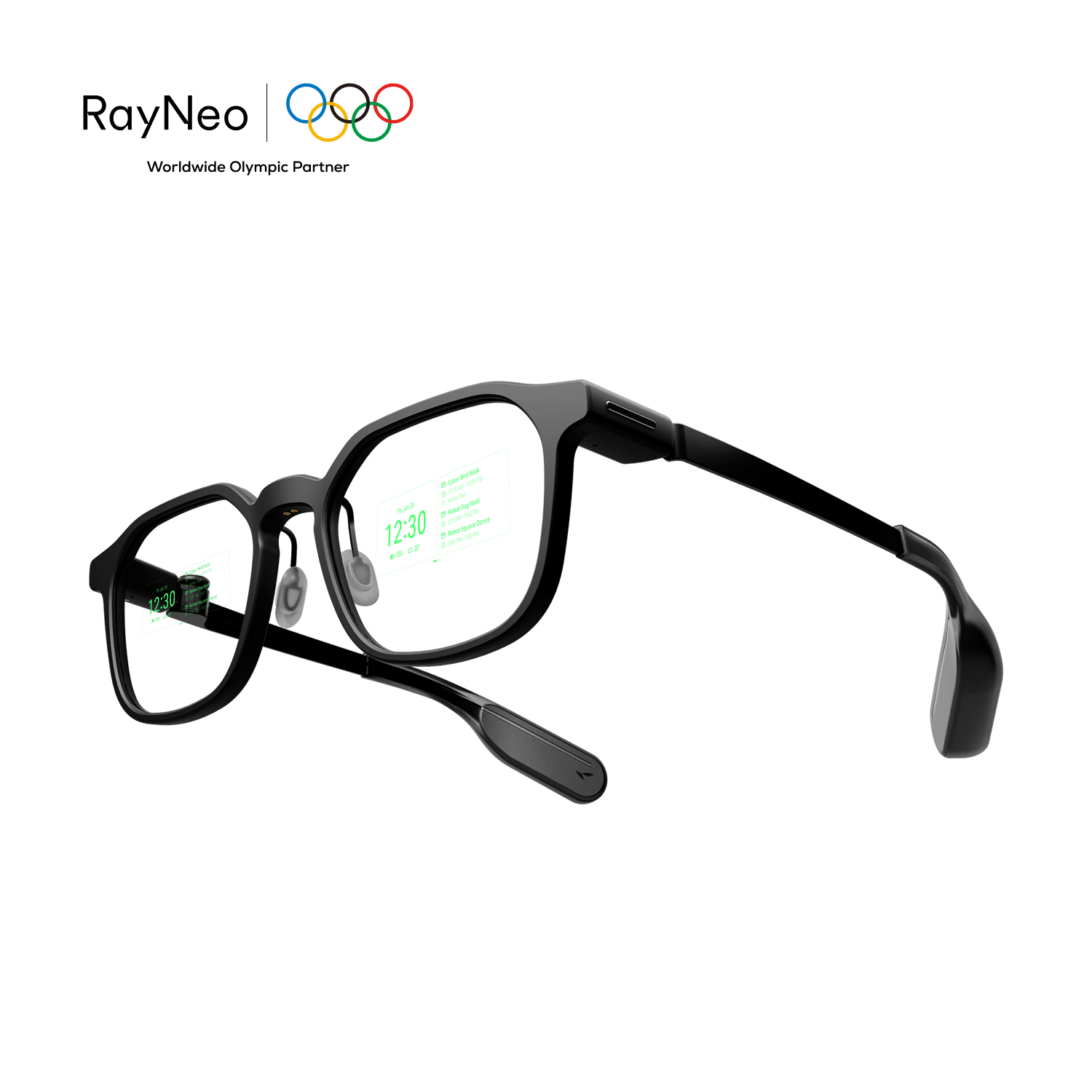
Augmented reality and artificial intelligence have started sharing the same small piece of hardware, a pair of glasses. AR smart glasses overlay a virtual screen on the real world, while AI-driven models lean on voice assistance, live translation, and notifications, and some products blend both approaches into one pair. Shopping for the right pair gets confusing fast once a catalogue mixes both approaches under one roof. The Rayneo range offers a useful map of how these two technologies sit side by side in everyday eyewear.
AR Display Versus AI Assistant: The Core Distinction
AR smart glasses project a virtual screen in front of the eyes, usually for watching video, gaming, or mirroring a phone or console, and that screen is the whole point of the design. AI-driven glasses instead put the display on standby and prioritize voice assistance, live translation, and quick access to information. Some products lean heavily on one function while others try to do a bit of each. Rayneo organizes its catalogue around this split, rather than offering one generic pair of smart glasses for every purpose.
Cinema and Gaming: The RayNeo GT and GT Max AR Glasses
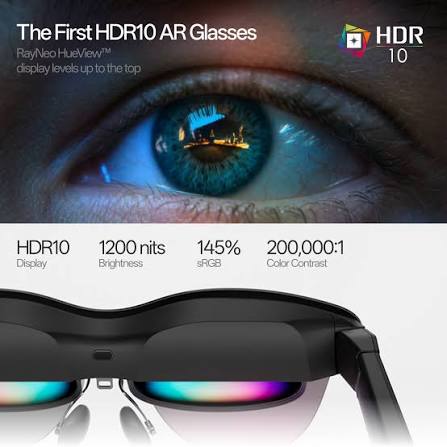
The It GT AR Glasses are built around native 3DoF viewing aimed at travel and everyday video watching. The RayNeo GT Max AR Glasses step this up with a 267-inch cinema display designed for movies and gaming. The RayNeo Pocket TV Pro turns GT glasses into what the brand describes as the world’s first Dolby Vision-capable portable viewing setup, while the separate Pocket TV Streaming Box offers a lighter alternative loaded with over 400,000 movies and 10,000+ apps on the same Google TV platform.
Audio and light-control accessories round out the GT line. The Sound Tube for GT and GT Max directs sound straight at the ears to cut leakage during movies and games, and separate Lens Shades exist for the standard GT and for the GT Max so each headset gets its own fit. Together, these pieces position the GT series as the part of the lineup most focused on large-screen entertainment rather than everyday wear.
Everyday Productivity and Notifications: RayNeo iO Smart Glasses
The brand iO Smart Glasses take a different approach, built into a vintage, minimalist frame rather than a bulky display headset. The product description frames them as reshaping on-the-go information interaction for people who need quick access to data throughout the day. Instead of a large virtual screen, iO subtly displays smartphone notifications right in front of the eyes. This makes the line closer to conventional eyewear in appearance while still carrying AI-driven display features.
A version with prescription lenses is also available, which matters for anyone who already wears corrective eyewear daily. An iO Eyewear Charging Case and a separate iO Eyewear Charging Clip exist as companion accessories, keeping the glasses powered without a stand-alone charger. That combination signals a product meant for repeated daily wear rather than occasional viewing sessions.
Travel and Portable Viewing: RayNeo Air Series AR Glasses
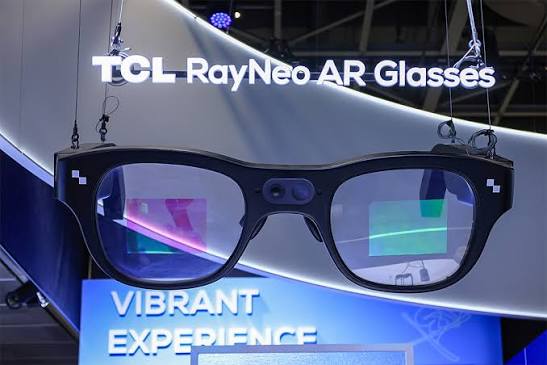
The Air series covers several related models, including the Air 4 Pro, the Air 3s, and the Air 3s Pro. The Air 4 Pro is described as the world’s first AR glasses with an HDR10 display, showing over 10 billion colors on a 201-inch HueView 2.0 screen, and it adds Vision 4000 processing for real-time SDR-to-HDR upscaling during movies, gaming, and short-form video. The Air 3s Pro pushes brightness to 1,200 nits to-eye, described as the highest among AR glasses available today. The standard Air 3s uses a HueView Micro-OLED display with a 201-inch virtual screen, 98% DCI-P3 color accuracy, and 200,000:1 contrast, plus OptiCare eye protection with 3840 Hz hybrid dimming.
Bundled accessories extend what the Air series can connect to. The JoyDock Gaming Adapter docks a Nintendo Switch to Air glasses for a 201-inch handheld screen, and a JoyDock Switch 2 Bracket lets the same dock hold the newer Nintendo Switch 2. An HDMI Adapter connects HDMI and Lightning devices, including PS5, Xbox, and older iPhones, to the glasses. Given how portable these models are positioned, this product line works as a lighter alternative to the larger GT Max setup.
Advanced AI Integration: RayNeo X3 Pro and X2 Models
At the upper end of the catalogue sits the Rayneo X3 Pro AI+AR Glasses, described by the brand as the world’s most advanced AI+AR glasses. It runs on Google Gemini for always-on AI assistance, alongside what the brand calls its AI OS for a spatial interface and global translation for real-time multilingual conversation. Customized nearsighted lenses are available through global lens partners, which extends usability to people with vision correction needs.
The Rayneo X2 AI and AR Glasses pair a display with an AI assistant layer in the same way the X3 Pro does, but add a different feature set of their own. It offers real-time, multi-language dialogue translation, smart navigation with a SLAM system, and gesture recognition, along with a map feature showing nearby landmarks. A built-in voice assistant handles calls, messages, photos, video, and music. Binocular full-color micro-LED optical waveguide displays with 100,000:1 contrast provide the visual side of the X2’s hybrid design.
- AR-focused models, such as the GT, GT Max, and Air series, center on large virtual displays for watching movies, playing games, or mirroring a console screen.
- AI-focused models, such as iO, prioritize subtle notifications and everyday information access over an immersive viewing experience.
- Hybrid AI+AR models, including the X3 Pro and X2, merge a display with voice assistance, translation, and navigation features in one pair of glasses.
- Travel-oriented use cases tend to favor the lighter Air series, while home entertainment leans toward the GT Max and its cinema-sized display.
- Day-long wear with minimal visual interruption fits the iO line better than it fits the display-heavy GT or X models.
Accessories and Customization Options for RayNeo Glasses
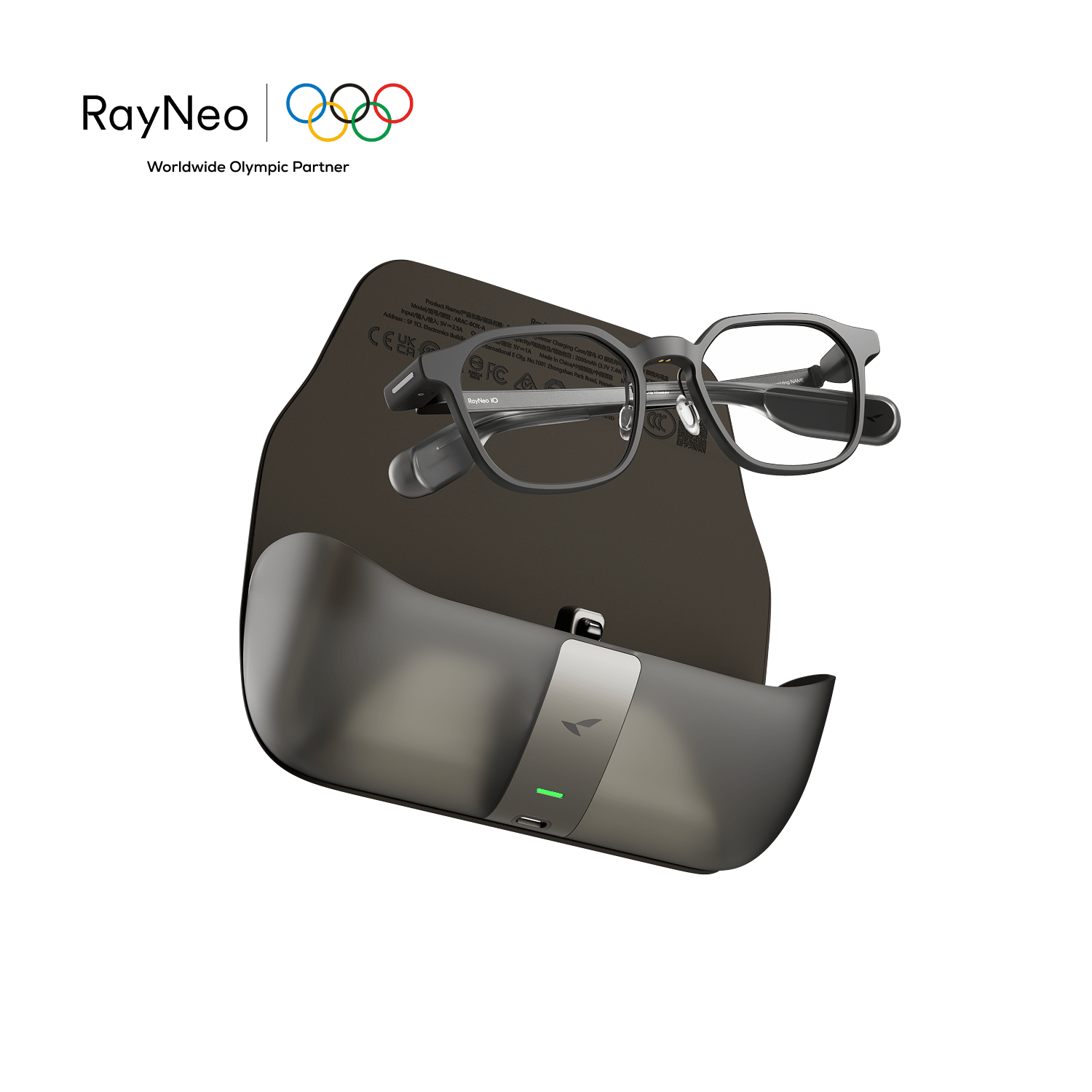
Beyond the glasses themselves, a range of add-ons extend or adapt each model. The JoyDock and its Switch 2 Bracket bring console gaming into the lineup, while the HDMI Adapter widens compatibility with older and current consoles. Charging accessories, including the USB-C Charging Adapter and the iO charging case and clip, address the practical side of keeping any pair of AR smart glasses powered through a full day.
Prescription lens options appear across both the iO line and the X3 Pro, showing that vision correction is treated as a feature that crosses several product lines rather than one. Bundles pairing specific glasses with matching accessories, such as an Air 4 Pro with a Pocket TV or a JoyDock, also sit within the same catalogue. Anyone comparing AI smart glasses against AR-first models can browse the current lineup directly through RayNeo‘s own listings.
The line between AR display hardware and AI assistant hardware keeps narrowing, and that shift is already visible across a single catalogue.