

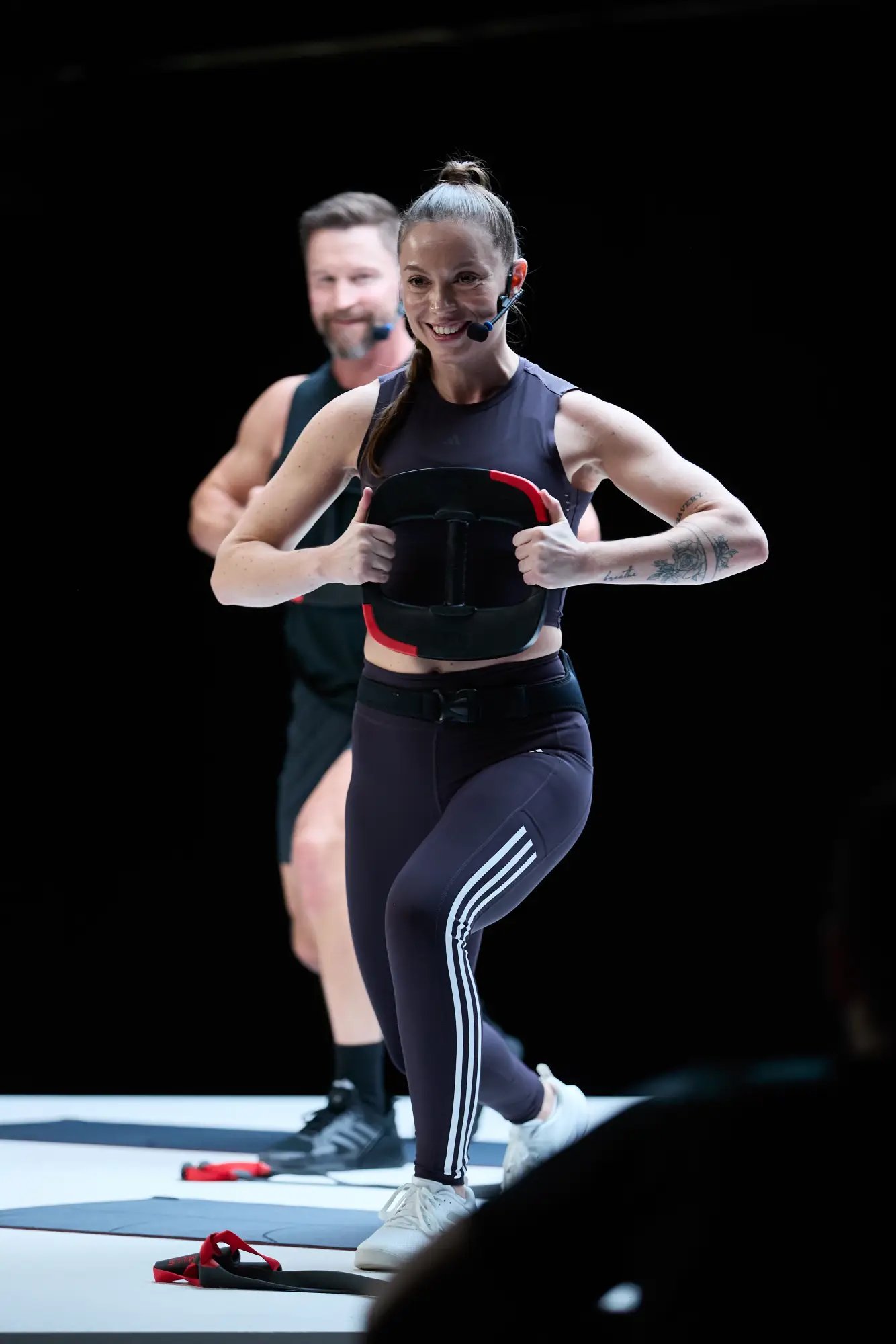
Group exercise has moved well past counting reps and following a beat. Many fitness brands now lean on research partnerships and lab testing to design classes, and science-backed group fitness has become a recognisable category of its own. Les Mills is one of the names most closely associated with that shift, offering a wide range of structured workouts built around ongoing research. This article looks at what that term actually means and where Les Mills sits within the wider fitness landscape.
Defining a Research-Led Approach to Group Exercise
The phrase describes classes designed with input from exercise scientists rather than put together on instinct alone. That can mean testing choreography for safety, measuring muscle activation, or studying how a format affects motivation over time. Science-backed group fitness is less a single technique than a design standard applied across many different workout styles, from strength to cardio to recovery-focused sessions.
In practice, this means a class format is reviewed, trialled, and refined before it reaches a studio floor. The goal, according to the brand, is for every workout to be safe, effective, and worth showing up for. That framing separates research-driven programs from classes built purely around trends or music choices.
Les Mills’ Core Philosophy: Research-Driven Exercise Design

It describes its approach as being built with purpose and backed by science. The company states that it tests and refines every program in what it calls the Les Mills Lab, and partners with university research teams to study topics such as heart health, strength, and long-term motivation. That independent research is positioned as giving clubs, instructors, and members confidence that a workout holds up to scrutiny.
Music plays a defined role in this philosophy too. Les Mills describes itself as the world’s largest provider of exercise-to-music classes, working with artists and labels to shape soundtracks for its programs. The company connects music directly to energy and focus during a session, treating sound design as part of the overall exercise format rather than a separate add-on.
The Main Workout Programs: BODYPUMP, BODYCOMBAT, and BODYBALANCE
Among its catalogue, three programs are frequently highlighted as flagship formats. BODYPUMP is described as the original barbell workout, built around repetition-based strength training. BODYCOMBAT draws on martial arts movement patterns and is described as a high-energy, high-intensity session intended to raise heart rate quickly.
BODYBALANCE is positioned differently again, described as the original yoga fusion workout and grouped under mind-body offerings. Alongside these three, the brand also lists BODYATTACK, a high-impact cardio format, and Les Mills YOGA, described as yoga designed for a broad range of participants. Together, these named programs illustrate how one brand can cover strength, combat-style cardio, and recovery-oriented movement under a single umbrella.
Workout Categories Available Across the Les Mills Range
Beyond individual program names, the brand organises its offering into broader categories that clubs and members can browse. These categories give a sense of how varied the range actually is, stretching from barbell work to circuit-style training.
- Strength-focused formats centre on structured resistance work, such as the barbell-based BODYPUMP program.
- Cardio and HIIT options include high-impact, heart-rate-driven sessions like BODYCOMBAT and BODYATTACK.
- Mind-body formats cover yoga fusion and recovery-oriented classes, including BODYBALANCE and LES MILLS YOGA.
- Dance-inspired and sculpt categories sit alongside cycle and circuit or HYROX-style formats in the broader listing.
- Early and later years categories address age-specific group exercise, separate from the core adult program lineup.
This spread shows that science-backed group fitness, at least as Les Mills frames it, is not confined to one training style. Instead, it spans a set of categories that a club or an individual can mix according to interest.
How Les Mills Fits Into the Global Fitness Market

The brand positions itself as a partner for gyms and clubs, not only as a direct-to-consumer brand. Its materials describe a global network of around 100,000 instructors delivering its classes, alongside tools for studio scheduling and instructor recruitment. The company also publishes figures aimed at clubs, citing increases in visit frequency, membership length, and member activity linked to adoption of its classes.
That dual focus, serving both clubs and individual exercisers, is part of what distinguishes the brand within the market. Many boutique studios build a single signature format, whereas the catalogue supplies a portfolio of named programs that a facility can license as a package. For club operators, the company frames group fitness as a retention tool rather than simply a cost centre, pointing to member loyalty metrics as evidence.
From Studio Classes to At-Home Training Options

Group fitness is no longer limited to a physical studio. Les Mills operates a digital arm called LES MILLS+, an app offering over 2500 online workouts spanning strength training, cardio, pilates, yoga, and HIIT. Sessions can be streamed to a phone, tablet, computer, or television, letting a workout happen outside a scheduled class time.
The digital platform also includes structured plans, described as running from three to twelve weeks, along with bootcamps and challenges aimed at different levels of experience. Alongside this, the brand sells its own equipment line, including SMARTBAR barbells, SMARTSTEP aerobic steps, SMARTBAND resistance tools, and the MBX mat. Equipment and digital access are sometimes bundled together, extending the studio experience into a home setting.
For anyone exploring that at-home option, further detail on current equipment and plans is available through the brand’s own listings at the offer link provided.
Group fitness has clearly expanded beyond the four walls of a studio, and research-driven design is a big part of why it has held attention. As formats keep splitting into strength, cardio, mind-body, and hybrid categories, science-backed group fitness looks set to remain a reference point for structured exercise.