

Shoppers researching backup power often run into three separate product families, and the model names can blur together fast. Anyone running Jackery solar generators compared side by side will notice distinct groups built for different jobs, from pocketable camp power to whole-home backup. Capacity, output, and expansion options separate the Explorer line, the HomePower line, and the 5000 Plus, and those differences matter more than any single headline number.
Understanding Jackery Solar Generator Tiers and Their Core Differences
The catalog is organized around capacity and output rather than a single scale. The Explorer line spans small, lightweight units through larger portable models, while the HomePower line focuses on home backup with higher watt-hour counts. The 5000 Plus sits above both groups in raw output, built to run heavier loads through both 120V and 240V connections, so Jackery solar generators compared this way reveal a spread rather than a straight ladder.
Comparing output figures alongside capacity tells more of the story than capacity alone. A battery with large capacity but limited output cannot run high-draw appliances, so the wattage rating matters just as much. Each unit is listed by both Wh capacity and W output, which keeps the comparison across the Jackery solar generators compared here fairly straightforward.
Explorer Series: Portable Power for Outdoor Adventures
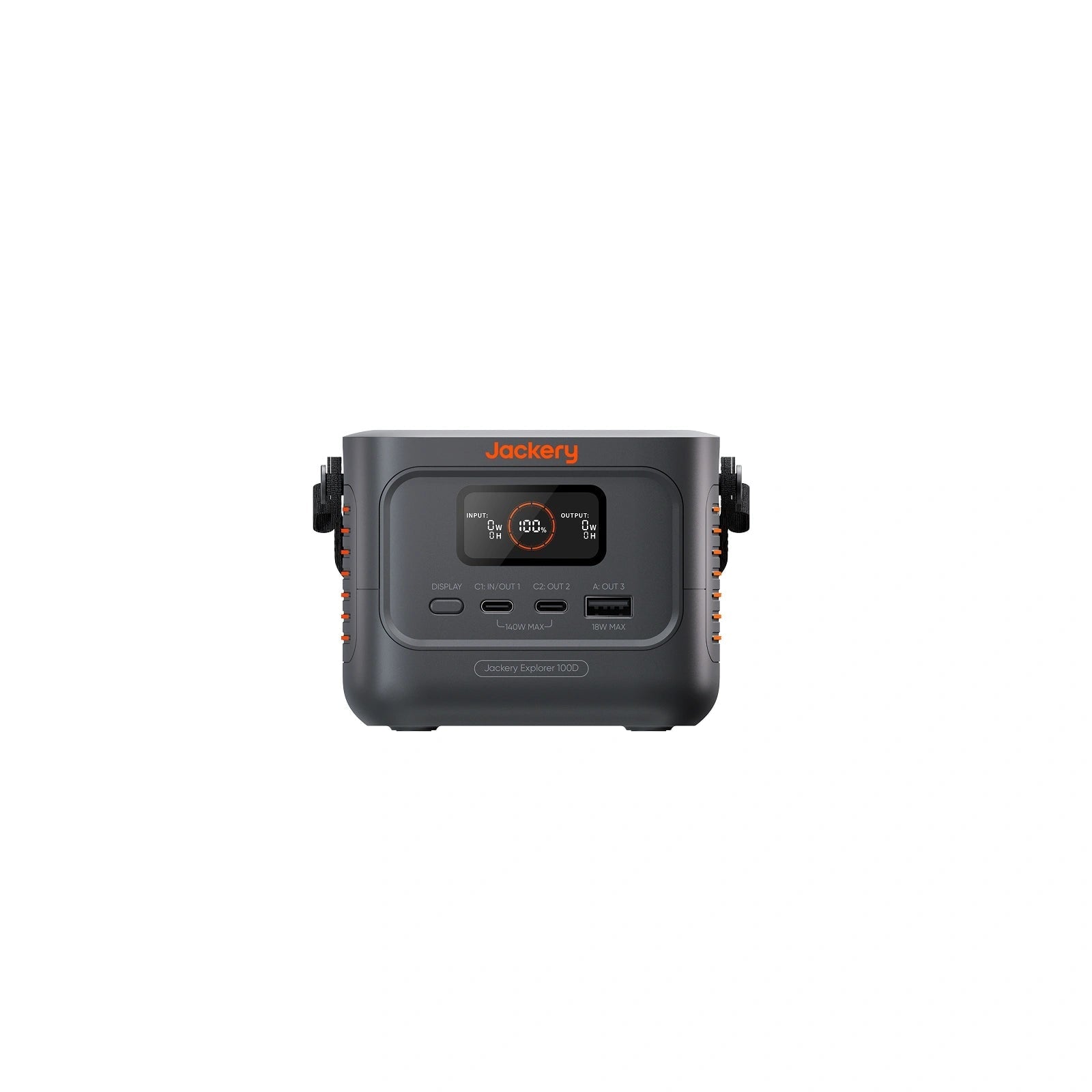
The Explorer series includes smaller models such as the Explorer 100D at 96Wh capacity with 158W output, and the Explorer 300 at 293Wh capacity with 300W output. Moving up the range, the Explorer 1000 v2 offers 1024Wh capacity with an emergency charge time of 50 minutes, and the Explorer 2000 v2 reaches 2042Wh capacity with a longer emergency charge time of 1.3 hours. The Explorer 1500 v2 sits between the two at 1536Wh capacity with 2000W AC output, and these figures let the growth in both capacity and charge time be tracked across the series.
These units are positioned for camping, hiking, and off-grid outings rather than full household backup. The Explorer 300 v2 keeps a compact footprint with 288Wh capacity and 300W output, suited to shorter trips. The Explorer 1000 Plus bridges the gap toward home-oriented models with 1264Wh capacity using a LiFePO4 battery, and it is listed alongside the newer HomePower 1000 Plus v2 as a close alternative.
HomePower Series: Essential Home Backup Solutions
The HomePower series is built around sustained household use during outages. The HomePower 1000 v2 delivers 1024Wh capacity with 1500W output, while the HomePower 1000 Plus v2 raises output to 1800W at the same 1024Wh capacity. The HomePower 2000 Plus v2 steps up to 2048Wh capacity and 2400W output, with capacity expandable to 12kWh according to the product listing.
Moving further up, the HomePower 3000 offers 3072Wh capacity with 3600W output, described as keeping a fridge, Wi-Fi, fans, and lights running through extended outages. The HomePower 3600 Plus increases capacity to 3584Wh while matching that 3600W output figure, with capacity expandable up to 21kWh. The HomePower 3600 Pro Max lists a separate output profile, reaching 2kW at 120V or 4kW at 240V. Jackery frames this model as a manual-transfer-switch option for home energy setups.
The 5000 Plus: Maximum Power for Major Appliances
At the top of the output range sits the 5000 Plus, listed at 5040Wh capacity with 7200W of rated power and a 14,400W surge rating. This model supports both 120V and 240V, which allows it to power larger equipment such as a 5-ton air conditioner or a water heater. This dual-voltage support sets the 5000 Plus apart from most Explorer and HomePower models, which run primarily on 120V, and it is one of the clearest spots where Jackery solar generators compared against each other show a real gap in ceiling output.
Because of this output ceiling, the 5000 Plus is framed as a solution for major home appliances rather than casual portable use. It follows a similar expansion approach to the HomePower line, yet its starting output figures already exceed most other models before any expansion is added. That combination places it in a category of its own among the lineup.
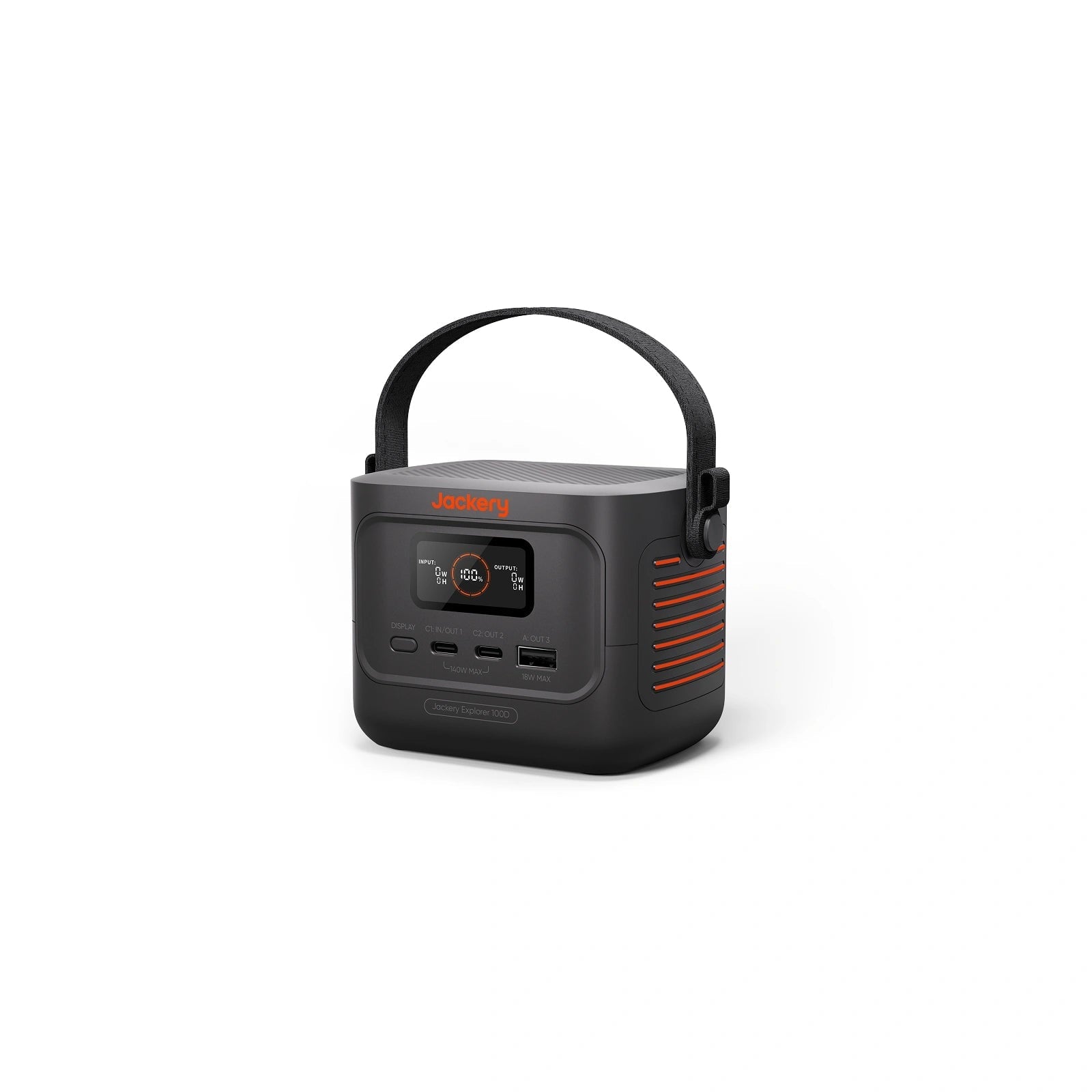
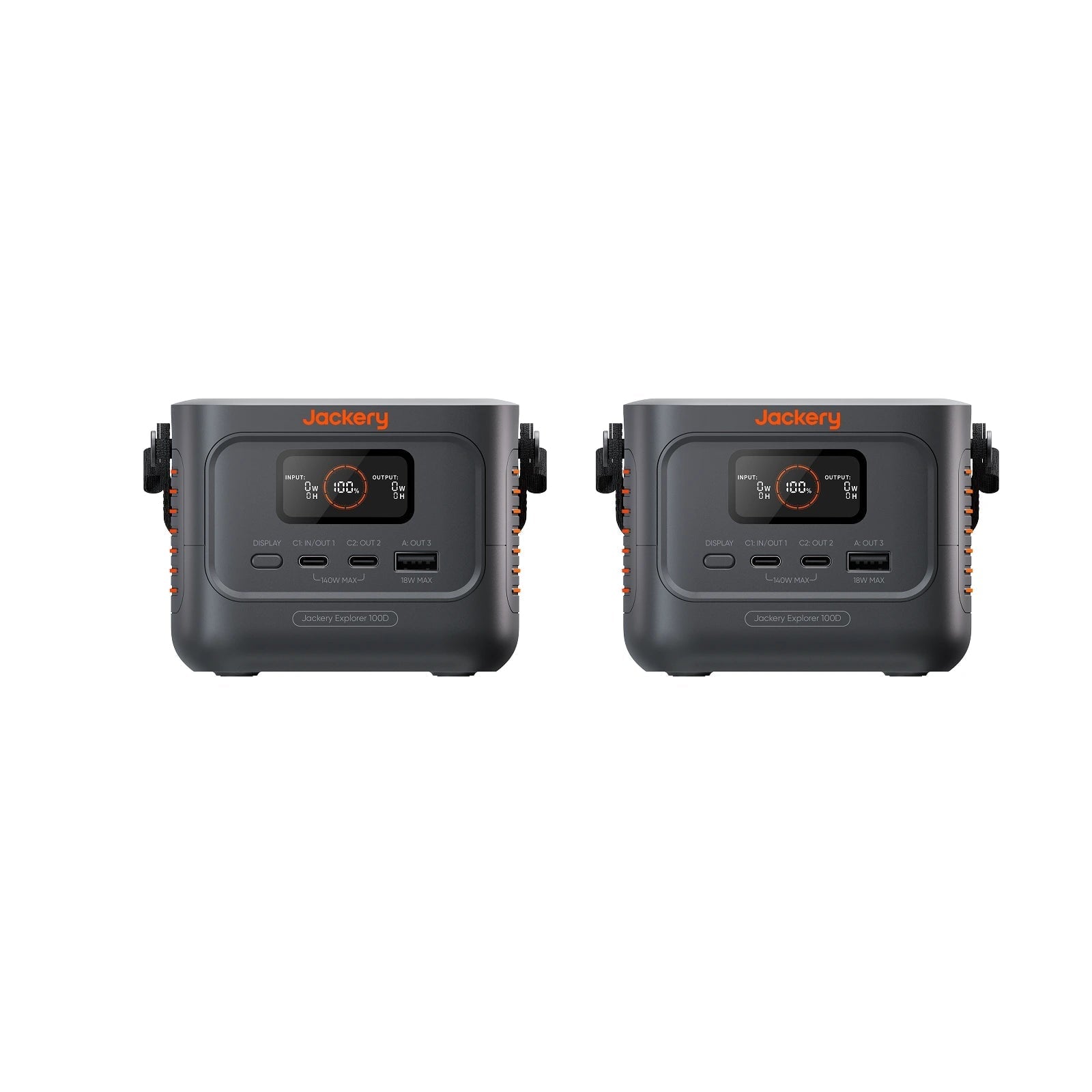
- The Explorer 100D offers 96Wh capacity paired with 158W output, making it among the smallest units in the lineup.
- The Explorer 2000 v2 provides 2042Wh of capacity with an emergency charge time of 1.3 hours.
- The HomePower 2000 Plus v2 delivers 2400W output from a 2048Wh capacity that is listed as expandable up to 12kWh.
- The HomePower 3600 Plus reaches 3584Wh capacity with 3600W output and expansion potential up to 21kWh.
- The 5000 Plus tops the range with 5040Wh capacity, 7200W rated power, and a 14,400W surge rating across 120V and 240V.
Expandability and Battery Pack Compatibility Across Product Lines

Several models support add-on battery packs rather than fixed capacity alone. The Battery Pack 2000 Plus pairs with the Explorer 2000 Plus, the Battery Pack 2000 Plus v2 pairs with the HomePower 2000 Plus v2, the Battery Pack 3600 Plus matches the HomePower 3600 Plus, and the Battery Pack 5000 Plus matches the Explorer 5000 Plus. This pack-based expansion is how the HomePower 2000 Plus v2 and HomePower 3600 Plus reach their listed expanded capacities of 12kWh and 21kWh respectively.
Accessories extend beyond batteries too, with items such as the Extreme Guard Carrying Bag compatible with the Explorer 1000 v2, Explorer 2000 v2, and HomePower 2000 Plus v2. A separate Carrying Case Bag is listed as compatible with a longer list of earlier and newer models, including the 500, 600 Plus, 700 Plus, 880 Pro, 1000, 1000 V2, and 1500 V2. This spread of compatible accessories shows how earlier units stay supported alongside newer releases.
Choosing Between LiFePO₄ Battery Models and Legacy Versions
Several current models specify LiFePO4, also written LiFePO₄, as the battery chemistry. The Explorer 1000 Plus and the Explorer 300 v2 are both listed with this battery type in the product descriptions, and the Explorer 2000 v2 line is described as using 2042Wh of LiFePO₄ (LFP) capacity on its own product page.
Earlier model names, such as the original Explorer 300, remain listed alongside their v2 or Plus successors in the catalog. Naming conventions like v2 and Plus generally signal a newer battery chemistry or an updated output figure rather than a different product category altogether. Reviewing these naming patterns helps clarify which listings represent current models and which represent earlier versions still available for sale. For anyone running Jackery solar generators compared across a shopping list, the suffix in a model name is often the fastest clue to its place in the range.
Working through the range this way, capacity, output, and battery type end up separating one model from the next more clearly than any label alone.