

Golf carts and other small recreational vehicles have long relied on lead-acid batteries, but more owners are now weighing a LiFePO4 golf cart battery as the lighter, longer-lasting alternative. A LiFePO4 golf cart battery promises steadier voltage, less maintenance, and reduced weight compared with a bank of flooded lead-acid cells. DC House builds several lithium battery options for golf carts, trolling motors, and RVs, each with distinct voltage, capacity, and case specifications.
Why Golf Cart Owners Are Switching from Lead-Acid to LiFePO4
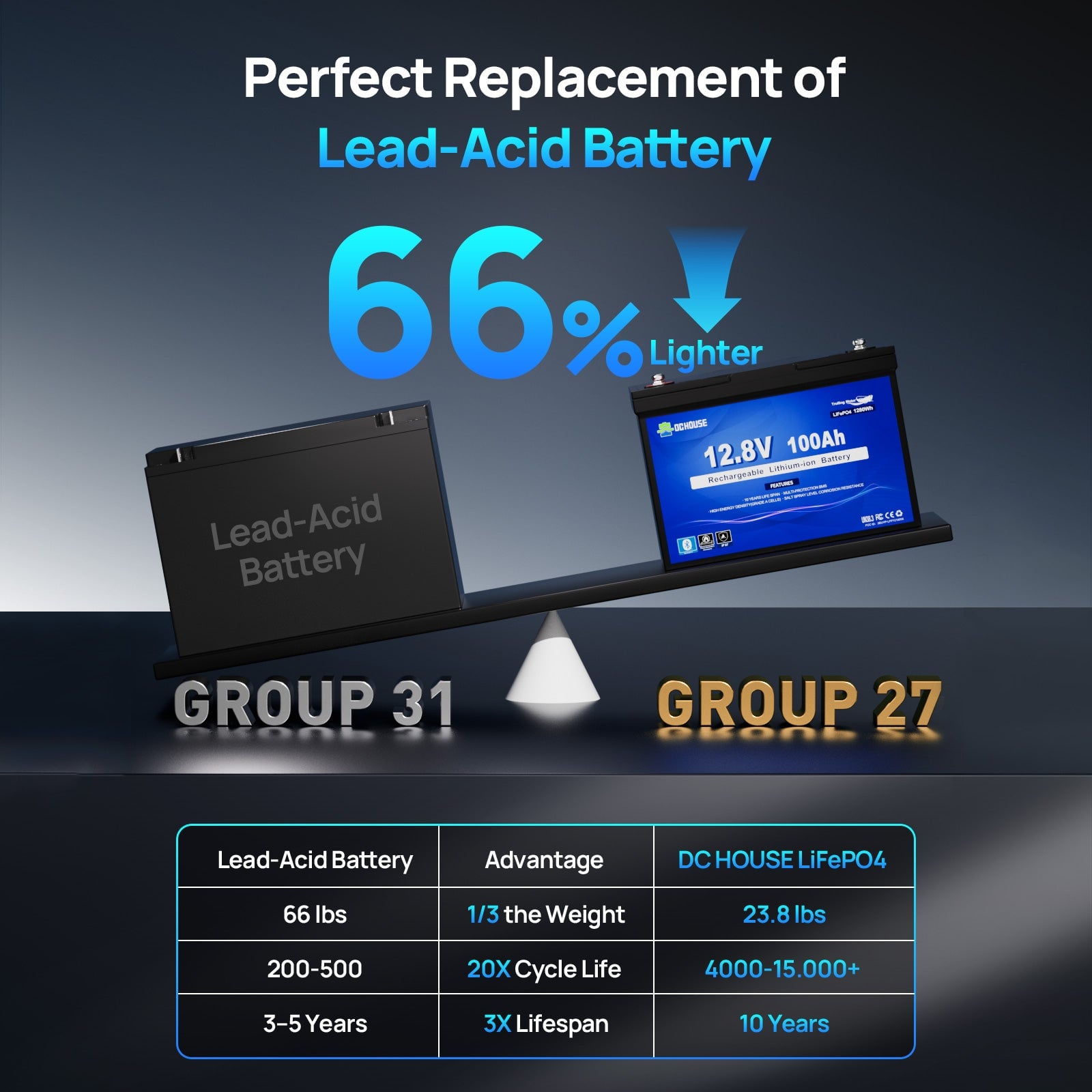
Lead-acid batteries have served golf carts for decades, but they come with recurring maintenance and gradual capacity loss. Owners often report needing to recharge several times a week just to keep a cart running through a full round. A LiFePO4 golf cart battery changes that pattern by offering a lighter pack with more usable charge per cycle.
One customer review on the DC House site described charging lead-acid batteries four times a week in Arizona heat before switching to a UL2580 lithium pack. After the change, an 18-hole round combined with a six-mile drive to the course used only 19% of the battery. That single data point illustrates why interest in lithium replacements for golf carts has grown.
Understanding Deep Cycle LiFePO4 Battery Technology
Deep cycle batteries are designed to be discharged and recharged repeatedly without the capacity collapse that shorter-cycle batteries suffer. LiFePO4, or lithium iron phosphate, is the chemistry used across this category. DC HOUSE applies it across its golf cart, trolling motor, and RV battery lines, each built with a metal case and an internal battery management system.
Across the range, batteries share a few structural traits. Operation voltage windows, charge and discharge current limits, and peak current ratings are specified for each model, which lets installers match a replacement pack to a cart’s existing electrical demands. Terminal types stay at M8 across the 36V and 48V golf cart packs, and the SENTRY G100 variant adds a UL2580 safety certification on top of that shared metal case design.
DC HOUSE 48V 100Ah Metal Case Battery: Core Performance and Specifications
The Dependable 48V 100Ah LiFePO4 Metal Case Battery runs on a rated voltage of 51.2V within an operation range of 40-58.4V, and it charges up to a voltage ceiling of 58.4V while sustaining 200A/200A continuously. Peak current can reach 280A for 30 seconds or spike to 670A for half a second, a combination that supports carts needing consistent power across a long round. The product page lists this model at 154 customer reviews, with 91% rated at the top score.
This model measures 514*280*243 mm and weighs 43.5 kg. Its metal case and advanced BMS protection are paired with a stated 5-year warranty on the charger-included version. A related SENTRY G100 variant, built to the UL2580 standard, offers a rated capacity of 100Ah at 5120Wh and a 2P1S configuration with a maximum continuous discharge current of up to 200A (2C), plus a discharge temperature floor extended down to -27°C.
48V 50Ah and 36V 100Ah Options for Varied Course Demands
Not every cart needs the largest capacity available. The Durable 48V 50Ah LiFePO4 Metal Case Battery packs 2560 Wh into a 460*333*125 mm case and draws a peak current of 120A for 30 seconds or 400A for a single second, figures that sit well below the 100Ah model’s peak ratings. Weighing 26.5 kg, it comes in noticeably lighter than the 100Ah metal case model above, and it adds Bluetooth monitoring along with low temperature protection.
For carts wired at 36 volts, the 36V 100Ah Metal Case LiFePO4 Lithium Golf Cart Battery offers a rated voltage of 38.4V and a battery power rating of 3840Wh. Its standard charge/discharge current sits at 50A/50A, and it weighs 36.1 kg. This option is also sold without a charger for carts that already have compatible charging equipment on hand, which can suit a straightforward lead-acid-to-lithium swap.
12V 100Ah Deep Cycle Systems for Trolling Motors and RVs
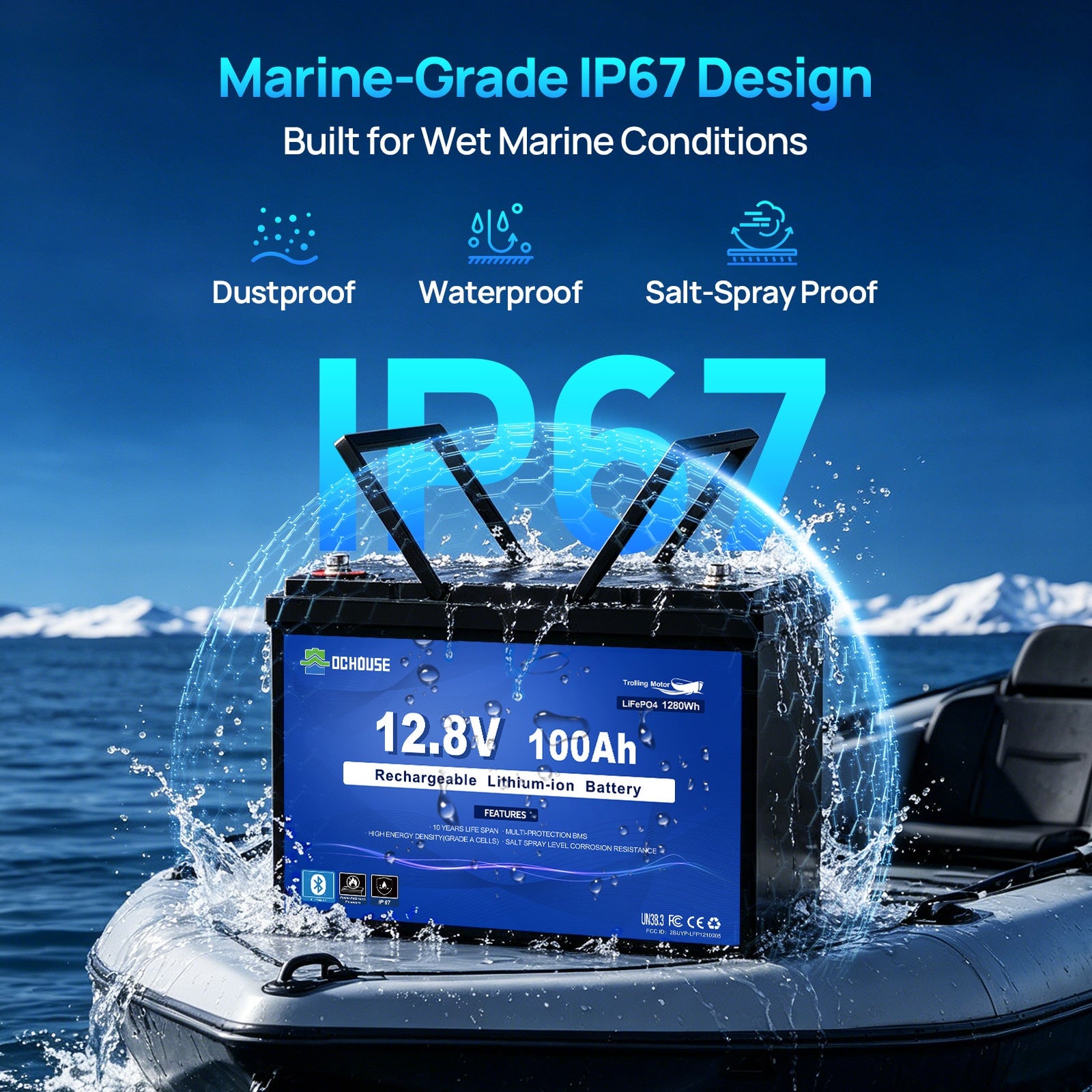
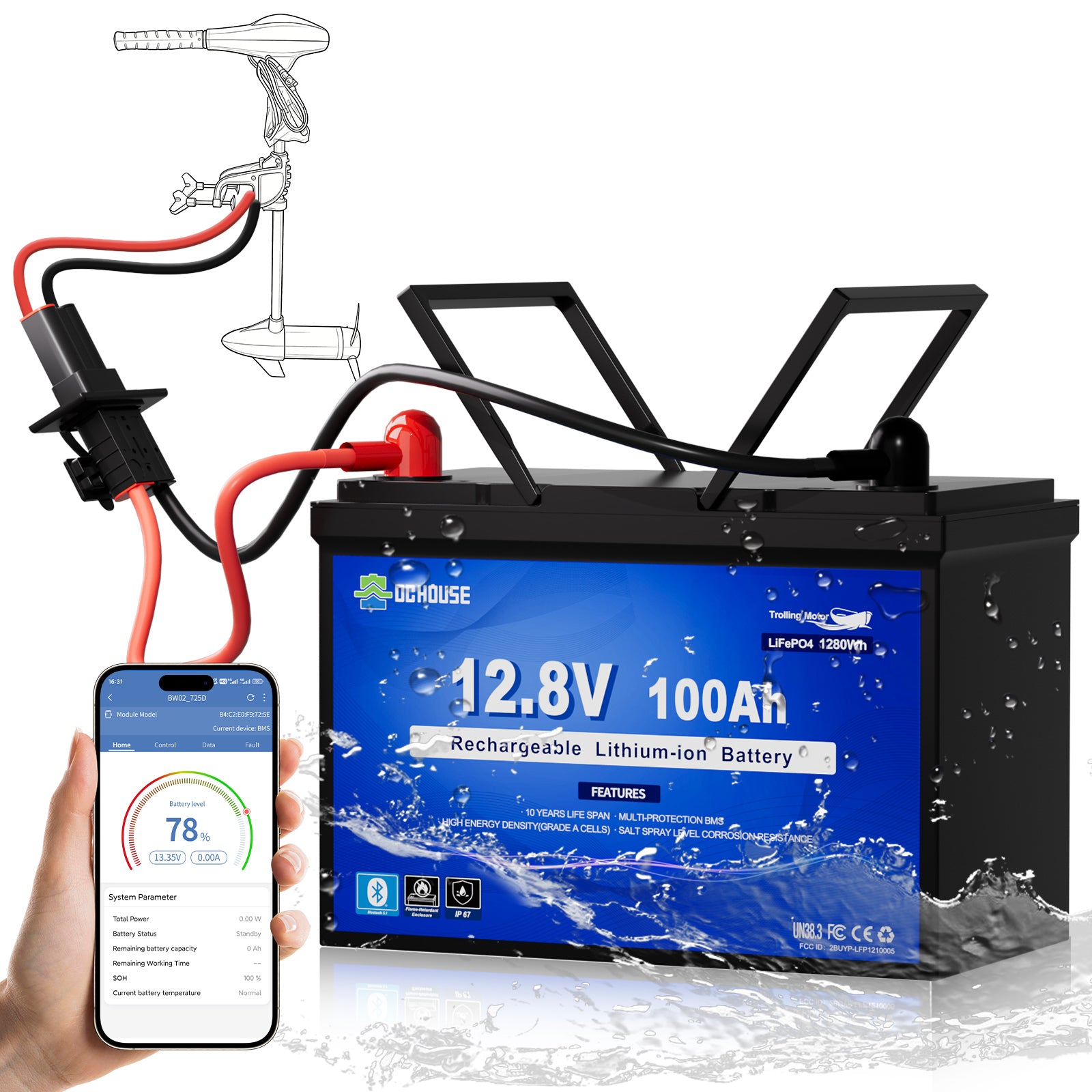
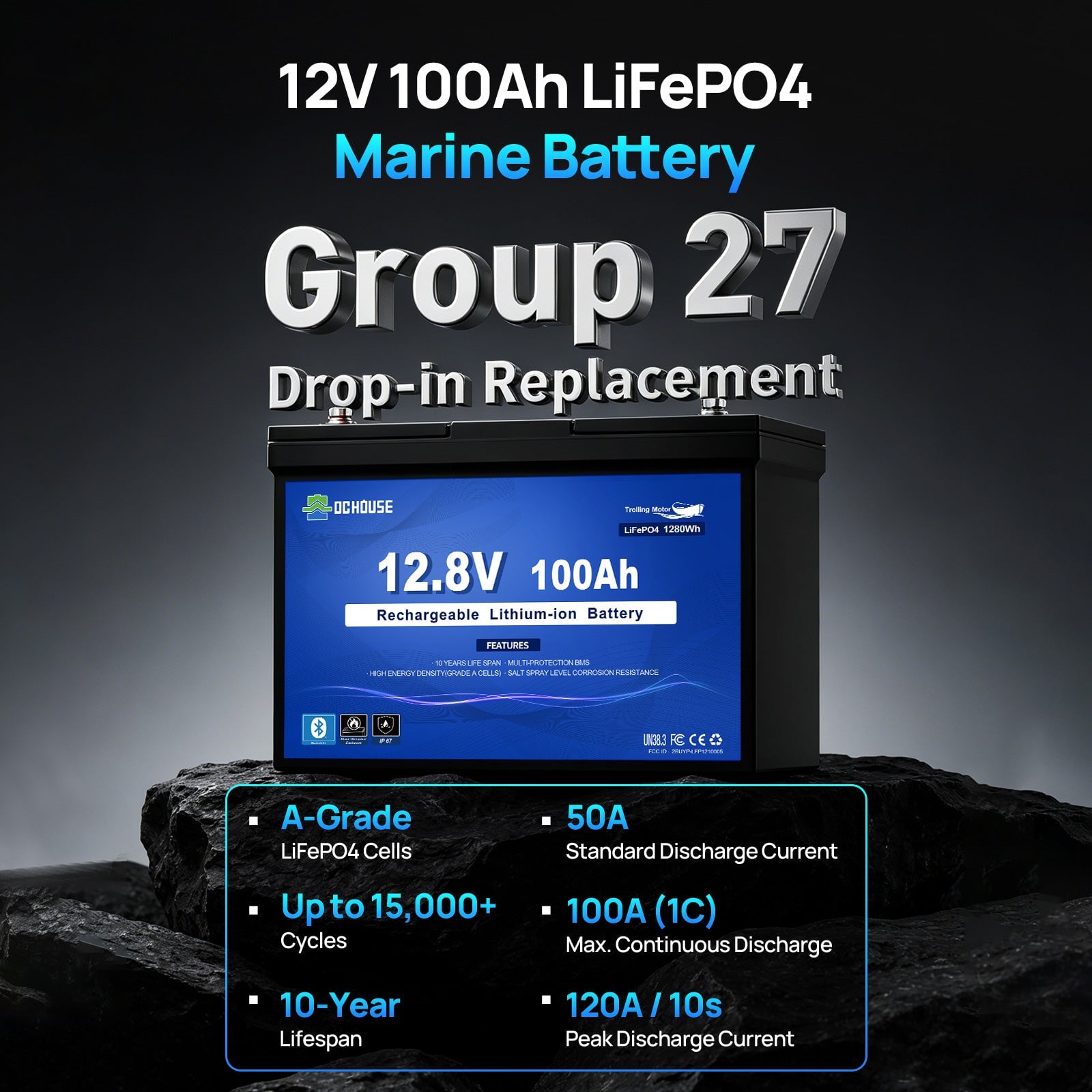
Beyond golf carts, DC House produces a 12V 100Ah IP67 waterproof LiFePO4 battery kit aimed at trolling motor and RV use. The kit carries a rated voltage of 12.8V and an operation voltage range of 9.2-14.6V, figures suited to trolling motor and RV electrical systems rather than golf cart drivetrains. Its standard charge/discharge current sits at 50A/50A, with maximum continuous current of 100A/100A and peak current of 120A for 10 seconds, and a separately listed 120A 4AWG waterproof connector plug supports golf cart, RV, and marine wiring setups.
This battery supports multiple series and parallel configurations, including 4P, 4S, and combinations up to 4P2S, giving marine and RV setups flexibility in how packs are wired together. Smaller 12V 10Ah and 12V 6Ah LiFePO4 batteries are also listed for lighter-duty applications that do not need the full 100Ah capacity.
Battery Management, Charging, and Long-Term Reliability
Every golf cart battery in the lineup pairs its cells with a BMS, a system explained in the brand’s own published content on battery management. Operation temperature ranges are also specified per model, with the 48V 100Ah Dependable unit rated for charging between 0 and 55°C and discharging between -20 and 55°C.
Charging equipment is sold either bundled with the battery or separately, including a 48V 15A lithium battery charger paired with a 1200W pure sine wave inverter. That inverter accepts a battery input voltage range of 42-58.4V and carries an efficiency rating of 90% or higher. DC House also lists a 30-day money-back window and warranty coverage of up to 5 years on select golf cart batteries, alongside ongoing customer support.
- A LiFePO4 golf cart battery typically weighs less than a comparable lead-acid bank, as shown by the 26.5 kg to 45.0 kg range across the 48V lineup.
- Standard and maximum charge and discharge current ratings are published per model, letting buyers compare current handling directly instead of guessing.
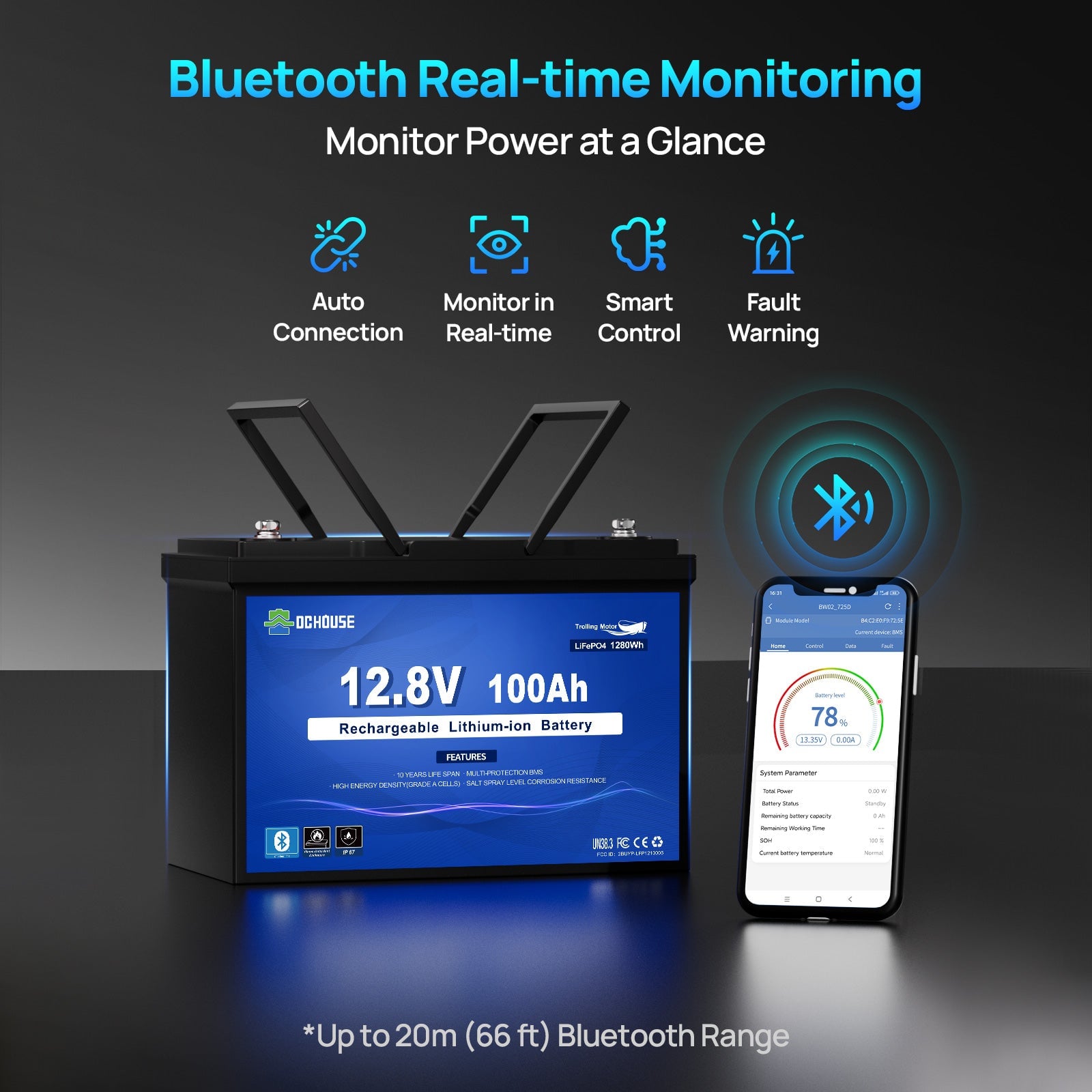
- Bluetooth monitoring and low temperature protection appear on several models, including the 48V 50Ah and 12V 100Ah units.
- Metal case construction is used consistently across the 36V and 48V golf cart batteries.
- Multiple series and parallel wiring configurations are supported on the 12V packs, which suits varied trolling motor and RV setups.
- Warranty terms of up to 5 years are listed on select golf cart battery models, longer than what is typical for flooded lead-acid batteries.
Taken together, these specifications point to a lithium lineup built around clearly stated voltage, current, and weight figures rather than vague marketing claims. Anyone comparing a lead-acid bank against a modern LiFePO4 golf cart battery can weigh those numbers directly against existing cart requirements. The spread of capacities, from 12V packs to 48V 100Ah units, reflects how differently carts, trolling motors, and RVs draw power. More detail on the full range sits at the DC House offer page linked through this article.
Specification sheets, not slogans, remain the clearest way to judge any lithium upgrade.